We’d love to show you how TISSL’s EPOS solution can help you grow your hospitality business.
EPOS systems are far more efficient than POS systems, but what exactly are they??
What is a POS and an EPOS System?
POS means ‘Point of Sale’ and it is where an exchange for goods or services is made. Essentially, the POS is a cash register that we see whenever we’re out shopping.
EPOS systems are the electronic format of the traditional POS systems and mostly operate online, where they store information securely in a cloud.
Heightened Security
An EPOS system tends to have much-improved security protocols over and above the traditional counterpart.
The requirement for much-improved security was, of course, essential, since EPOS systems are web-based, which means that EPOS systems are safe to use with little risk that they will be hacked or compromised. Cloud-based security is more for preventing the risk of losing data, e.g. a server failing and then losing the month of sales figures, rather than a hack. This is, of course, a possibility but it is more for the benefit of saving data rather than somebody stealing it.
Flexible Payment Options
How we exchange money is a continually changing phenomenon and because of this, it’s imperative that hospitality providers and other businesses are capable of accepting different payment methods that are currently in existence.
From online payments to the traditional credit card payment, through to the modern contactless payments, consumers have many different preferences in which to pay for goods and services.
The traditional POS system generally can only accept cash payments and payments made by debit and credit cards. For any business that still uses a POS system, it’s likely not doing them any favours, because they prevent some customers from buying products or using services because they are unable to pay.
There is no way for older-style POS systems to accept online or contactless, so as such, they are now considered outdated.
Hardware Flexibility
In bygone times, POS systems would only work with the hardware that was supplied with it. Typically, that would have been a stationary terminal, cash drawer, as well as a credit and debit card reader.
In terms of hardware, EPOS systems are a lot more flexible and many EPOS systems are compatible with iPads and various other mobile devices, which are now commonly used in restaurants, cafes and hotels.
Along with this flexibility comes the elimination of costly and bulky hardware that POS systems relied upon. Again, this reduces upfront costs as well as maintenance costs significantly.
With software that is cloud-based, as long as there’s a web connection, it’s now possible to gain access to your system anywhere in the venue.
What’s more is that many of today’s EPOS systems come with offline functionality, so you don’t have to heavily rely on an online connection. This means that if the internet goes down, your entire network does not go down with it. If that has happened to you before, you’ll know how frustrating it can be. Not just for you, but for your customers as well.
Management of Inventory
Because it’s possible to gain real-time access to your inventory from your EPOS system, it’s a far more flexible system of inventory management than what was available with old POS systems. Here at TISSL we currently manage your inventory through integration on a 3rd party system.
You can track your inventory from your EPOS terminal, which means that if your stock is running low, you’ll receive notifications. In turn, you’ll never be short of your best sellers, but at the same time, you’ll never be overstocked either. On TISSL’s systems, you can do this on the back office, not on the front of house pos terminal’
With the traditional POS system, inventory management errors would sometimes lead to shelves being laden with dead stock. All too often, that dead stock would then have to be ‘shelved’, which would cost time and money.
Analytics Tools
Still, running an older POS system? Do you get sales trends information from it? Charted sales figures?
For EPOS systems, these stats come as standard and they offer a lot more functionality too. You get a host of analytics tools with modern-day EPOS systems allowing you to accurately asses how business performance is doing.
With our EPOS systems, you can view expenses when inputting the product, you can state the cost price of products and GP and it will calculate your wholesale price.
This is a very attractive level of insight to have and it’s something that will serve you and your business well as there will no longer be any guesswork involved.
Better Support
EPOS system vendors provide customer support on a 24/7 basis, which few POS system vendors would offer.
Because of this customer service availability, if you’re running an EPOS system, any issues you encounter will be addressed rapidly.
But as it is with any expensive software, it’s likely you wouldn’t want to make the investment unless you had dedicated support. That said, if you are looking to invest in an EPOS system, check with the supplying company to make sure they offer a high level of technical and maintenance support.
Conclusion
With EPOS systems you get much more flexibility and data, there’s greater security and the added benefit of more mobility over and above the traditional POS systems.
Modern EPOS systems don’t rely on bulky hardware and the software is relatively easy to implement and user-friendly.
When you choose to invest in an EPOS system you’ll get far more out of your POS. Rather than merely being a cash register, you now can rely on an all-in-one marketing, management and analytics tool.
How Can Tissl Help?
We at TISSL are a UK-based POS company who provide hospitality businesses of all shapes and sizes with efficient, cost-effective and innovative EPOS solutions.
Whether you and your business require a single out-of-the-box solution or an enterprise, multi-site cross border system, we will have something that will meet all of your needs.
If you have any questions or need further information on EPOS systems, please don’t hesitate to contact us by either calling 01908 525800 or emailing sales@tissl.co.uk – we’ll be more than happy to help.
Although cloud-based software isn’t a new term, it’s rapidly growing technology that many businesses are adopting and using to help them operate more efficiently.
Cloud-based software is a virtual pool of shared resources that acts as a network service, database and storage space, which is accessed via the internet. Within the IT industry, cloud-based software or cloud computing has been used for many years now and is slowly starting to be utilised within other sectors, such as finance, retail and hospitality.
Before cloud-based software was introduced, businesses were relying on expensive and inefficient servers to help manage their business and staff. This can be overwhelming and time-consuming, but there are now solutions to avoid this.
Although what was initially a slow start in the hospitality industry, cloud-based software enables more seamless service that doesn’t break the budget. Whether you’re a small company or enterprise, cloud-based software can support you and your business.
How Can Cloud-Based Software Support Businesses?
There are many ways in which cloud-based software can help your business.
Reduced Costs:
The first advantage of cloud-based software is the reduced cost. You will no longer be required to purchase expensive hardware and software and you can often use a pay-as-you-go or subscription model to help reduce operational costs. You can also update cloud computing services as and when you need so you are always in control of what you’re spending.
Easily Scaled:
A popular feature of cloud-based software is that it grows with your business. If your company is growing fast, you need a platform that allows you to scale-up your services. Cloud services let you do this and similarly if you need to scale-down this can be done at a click of a finger.
Improves Data Security:
Ensuring complete data security is on the top of most businesses’ lists. With cloud-based software, all your data is stored in the cloud so there isn’t any threat of data loss. Disaster recovery systems are expensive and are not affordable for most small businesses. Cloud-based software ensures all data is stored safely and securely.
How Can Cloud-Based Software Support The Hospitality Industry?
As well as all the above points, cloud-based software can support the hospitality industry specifically.
Mobility and Accessibility:
In today’s digital age, it’s more important than ever to be able to access your systems and data whenever and wherever. Cloud-based software allows you to do just that. Being in the hospitality industry, you may have branches across the country or even across the world, but everyone must be able to access it from one place.
Not only that but you can access it from your laptop, PC, smartphone or tablet, which is perfect for employees that are on the go or can’t be at their desk.
Productivity:
The hospitality industry is fast-paced. You don’t have time to waste training staff on complicated online systems and the longer it takes to do this, the less time they have to get stuck in. Cloud-based software is generally user-friendly and can be picked up quickly by anyone.
This gives your staff, both new and old, more time to do what they do best.
Collaborative Working:
Hospitality is all about teamwork. It doesn’t matter whether you’re part of the management team, a chef or a waiter, to run a successful hospitality service you all have to work together.
Having all your resources in the same place for everyone can encourage staff to work collaboratively. It also helps to streamline communication and give real-time feedback so that no one misses a thing.
What Is Cloud-Based EPOS Software Horizon?
To help support your hospitality business, TISSL has developed the next generation cloud-based EPOS system, HORIZON.
HORIZON offers you an easy-to-use till system that will give your customers the best experience possible. It is fully compatible across multiple operating and hardware systems and includes a user licensing model that allows for maximum flexibility.
Features include bill splitting across multiple payment methods, live reporting access for users and products and regular software updates. This EPOS software solution guarantees to support you in all areas of your operations.
Find Out More About TISSL’s Cloud-Based Software
Does this sound like something you and your businesses need? To learn more about cloud-based software and HORIZON, check out the resources on our website or contact one of our friendly team members today by emailing sales@tissl.co.uk or calling 01908 525800.
What is an EPOS System?
Every hospitality provider with a presence should be using an EPOS system.
Once upon a time, cash tills were perfectly adequate for the majority of small businesses. That is until they grow to the point of selling thousands of items daily.
And when it comes to tracking inventory, it takes up a lot of time. That said, the old-style cash till together with traditional POS is best left in the bygone age, because of a lack of efficiency.
Luckily, we now have EPOS systems, which means that any size of hospitality business no longer has to manually manage stock. Instead, EPOS offers seamless data synchronisation across numerous sales channels, as well as storage of inventory and point of sales.
What are EPOS Systems?
EPOS = Electronic Point of Sale. The EPOS system is a blend of EPOS hardware together with EPOS software, providing businesses with efficient operations and processes.
For store owners that utilise EPOS systems, they can process and track sales and they can carry out other procedures with ease. An added bonus is that business performance is able to be better understood.
With this integration, customers and staff can enjoy a seamless experience in terms of information and payment alongside the overall restaurant experience.
EPOS Software
Key to hospitality management, EPOS software must suit the needs of the business.
Once the EPOS software is chosen, the next step is to select EPOS hardware that offers compatibility.
Depending on your business needs, typical EPOS software features include:
Processing of purchases and orders
Scheduled discounts & offers
Card machine integration for paying at table
Live menu building
Reservation integration
Not all businesses will require the same functionality to fit in with their specific requirements, which EPOS system vendors are aware of.
That’s why they frequently cater to a scalable system to fit in with unique business requirements. Many EPOS system vendors also provide customisation including menu building and API integrations so that businesses are able to get the best-fit solution for them.
EPOS Hardware
Each individual business will have its own specific EPOS hardware requirements depending on business size and functionality.
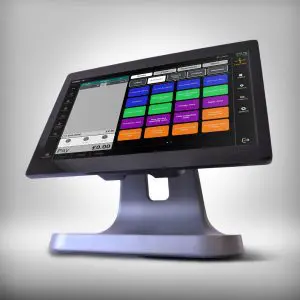
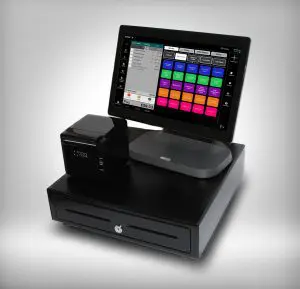
Hardware consists of a terminal screen, which is where orders are registered and where payments are processed.
With a touch screen monitor, which is now an affordable acquisition for most retailers, data entry is more efficient at point of sale and there’s no longer a requirement for a keyboard.
Additional components of EPOS hardware are connected either via cable or wirelessly. These components can sometimes include:
A Cash Drawer
As the name suggests, the cash drawer is a safe drawer for storing cash. The EPOS system controls when and by whom the cash drawer is opened. This helps to improve security and reduce employee theft. With our cloud-based software, you can also sync your tablets so that your mobile devices are able to cash off orders as well as fixed terminals.
A PDQ Terminal
PDQ stands for ‘Process Data Quickly’ and is another name for a card machine, which accepts credit card payments.
These machines accept Chip and PIN and contactless payment technology, making the process of paying for something much easier and quicker for both customers and staff. It also offers customers a safe way of paying using their credit and debit cards. PDQ’s aren’t typically provided by the EPOS company and will be an integration with a 3rd party company. Also note that with card machine integration, restaurant staff do not have to manually input the amount at the table and will automatically connect to the terminal.
A Receipt Printer
This is a printing device that prints off customer transaction records and receipts. Also, kitchen impact printers from which the chefs can receive the food orders.
Displays:
There are a few choices of displays for EPOS systems, including pole, customer and line displays. At the point of sale, these devices are used to show customers pertinent transaction information, including specific items being added or the total due. Here at TISSL, we offer KDS screens which are Kitchen display monitors that chefs can receive orders through.
Tablet EPOS:
The tablet EPOS can be used instead of or in conjunction with a traditional EPOS. It’s an ideal addition for smaller-sized stores that have limited space and for businesses that require a higher level of mobility at checkout, such as a restaurant.
An easy way to ensure compatibility is to purchase hardware and software from a single supplier. It calls for no extra integration and helps to reduce costs.
It’s worth noting that EPOS hardware and EPOS software are generally only compatible if they are of the same brand.
How do EPOS Systems Work??
The EPOS system is connected to an online network.
In simple terms, the EPOS system scans and sends the order through to the kitchen to either a receipt printer or KDS screen pertaining to a product via a barcode scanner. It then makes a calculation of the amount to be paid by the customer.
It’s a system that provides pricing information that is accurate while it offers an efficient service to customers. Also allowing customers to split their payments across multiple methods.
Simultaneously, the software records and stores sales information customer data, and send the order through to the kitchen or bar to be served.
The store owner is at liberty to view different types of reports as and when they wish, which are not only reflective of real business performance, but they also assist with decision-making.
The Benefits of an EPOS System
In comparison to traditional POS, the EPOS system comes with an array of benefits, particularly over the longer term.
Benefits for the customer:
EPOS systems ensure product pricing and information is correct on different sales channels.
EPOS systems speed up the processing of orders and transactions.
They permit the use of discount and promotion vouchers offline and online.
They provide a smooth, convenient and efficient dining experience and offer numerous different payment options.
Benefits for the business owner:
EPOS systems work in centralising business operations as you can manage a multitude of operational channels from one single place.
EPOS systems track business performance and generate insightful reports.
EPOS systems provide users with a clear insight into menu management, staff performance across multiple sites.
They reduce time and errors.
They enable instant, accurate and easy and secure storage and updating of data.
You can set tier staff permissions as a way of reducing the potential for employee theft.
How Can TISSL Help?
We at TISSL are a UK-based POS company who provide hospitality businesses of all shapes and sizes with efficient, cost-effective and innovative EPOS solutions.
Whether you and your business require a single out-of-the-box solution or an enterprise, multi-site cross border system, we will have something that will meet all of your needs.
If you have any questions or need further information on EPOS systems, please don’t hesitate to contact us by either calling 01908 525800 or emailing sales@tissl.co.uk – we’ll be more than happy to help.
Dive into the future of restaurant management with TISSL’s User-Based Licensing. Enjoy unmatched flexibility, scalability, and cost-efficiency with the power to adapt seamlessly to seasonal demands.
In the fast-paced world of the restaurant industry, finding an Electronic Point of Sale (EPOS) system that not only meets your operational needs but also adapts seamlessly to your business dynamics is crucial. At TISSL, we pride ourselves on offering a unique solution that sets us apart from the competition – our user-based licensing model. In this blog, we’ll explore the myriad benefits this innovative approach brings to restaurant owners, helping you make an informed decision for the heart of your business.
Flexible scalability
One of the standout features of TISSL’s user-based licensing is the flexibility it provides in scaling your operations. Say goodbye to rigid licensing structures that force you to pay for a fixed number of licences, regardless of your actual needs. With our model, you have the freedom to adjust the number of POS devices or tills in your restaurant without incurring additional software costs. TISSL is also hardware agnostic, meaning that you can run our software on the devices you choose- you can even reuse your existing hardware.
Tailored to your seasonal demands
Running a restaurant involves navigating through different seasons, each with its unique challenges and opportunities. TISSL’s user-based licensing understands the ebb and flow of your business. During peak times, such as the bustling holiday season, you can effortlessly scale up the number of licences to accommodate the increased demand without breaking the bank. Conversely, during quieter periods, you have the flexibility to scale down, optimising your costs when staff numbers and sales naturally dip.
Cost-efficiency beyond compare
Traditional EPOS models often burden restaurant owners with fixed costs, leading to unnecessary expenses during slow periods. TISSL’s user-based licensing ensures that you pay only for what you need when you need it. This cost-efficient approach empowers you to allocate resources strategically, redirecting savings into areas that directly contribute to the growth and success of your restaurant.
Enhanced staff productivity
Efficiency is the cornerstone of a well-run restaurant, and TISSL’s user-based licensing is designed with this in mind. With the ability to deploy as many POS devices or tills as necessary, your staff can operate at optimal efficiency, reducing wait times and enhancing overall customer experience. It’s a win-win situation: your team delivers outstanding service, and you only pay for the licences that actively contribute to your restaurant’s success.
Seamless integration with hardware investments
Investing in hardware for your EPOS system is a significant decision. TISSL’s user-based licensing ensures that your hardware investment goes a long way by allowing you to connect as many devices as needed without worrying about additional licensing costs. This seamless integration optimises your resources and guarantees a high return on your initial investment. Our software is hardware agnostic, allowing you to choose which devices to run your business from. Whether you want to have us source your new tills, or you’d prefer to reuse your own- we’ve got you covered.
In the competitive landscape of restaurant EPOS solutions, TISSL stands out as a game-changer with its user-based licensing model. By offering unparalleled flexibility, scalability, and cost-efficiency, we empower restaurant owners to take control of their operations and adapt to the ever-changing demands of the industry. Make the smart choice for your business – choose TISSL and experience the freedom to thrive in every season.
TISSL is excited to announce the rollout of its new and improved training format designed to enhance client experience and drive success in the hospitality market.
The revamped training format introduces a host of features aimed at providing clients with unparalleled access to resources and personalised support. Key highlights include unlimited access to TISSL’s extensive library of training videos and interactive one-on-one sessions led by TISSL’s dedicated data and training specialist.
“We’re thrilled to introduce our enhanced training format, tailored specifically to meet the evolving needs of our valued clients,” said Lauren Button, Data and Training Specialist at TISSL. “With this new offering, we’re empowering our clients to stay ahead of the curve and maximise the benefits of our solutions.”
The unlimited access to training videos allows clients to refresh their knowledge at their convenience, ensuring they stay up to date with the latest developments in TISSL’s offerings.
Additionally, the personalised virtual sessions provide clients with tailored guidance and support, reinforcing learning and boosting confidence. These sessions are designed to be engaging and “quiz-like,” with attendees being asked to replicate processes from the training library to ensure full comprehension and clarity.
“Our goal is to equip our clients with the knowledge and skills they need to succeed,” added Lauren. “Whether they’ve recently onboarded new staff or simply require a refresher, our enhanced training format is designed to meet their needs and drive performance.”
TISSL clients can now take advantage of this new training format to elevate their expertise and enhance their business operations. For more information or to schedule a personalised training session, clients are encouraged to contact the TISSL team today.
With TISSL’s enhanced training format, clients can expect to stay ahead of the competition and confidently achieve their business goals.
To enquire about a training session for your business, please contact sales@tissl.co.uk or call 01908 525800.
As the hospitality industry rejoices in the accomplishments unveiled at The MICHELIN Guide Ceremony Great Britain & Ireland 2024, TISSL proudly congratulates the esteemed restaurants honoured with Michelin stars for their unwavering commitment to excellence. Among the fourteen celebrated establishments are six who trust in TISSL’s Electronic Point of Sale (EPOS) solutions, further affirming our dedication to elevating hospitality technology and empowering businesses to deliver the perfect service.
The Ledbury, London – Photo from The MICHELIN Guide
The pinnacle of gastronomic achievement was reached by The Ledbury, London, as it claimed a coveted third Michelin Star. Renowned for its technical mastery and sublime flavours, The Ledbury epitomises the essence of fine dining, with impeccable service complementing its culinary prowess.
Gymkhana – Photo from The MICHELIN Guide
Gymkhana and Trivet, both based in London, ascended to the prestigious Two Michelin Star level, a testament to their continued evolution and dedication to culinary excellence. TISSL salutes these establishments for their commitment to pushing boundaries and delighting diners with superbly crafted dishes.
Humble Chicken – Photo from The MICHELIN Guide
Ending the evening with one Michelin Star awarded are 1890 by Gordon Ramsay and Humble Chicken. These stand as a testament to the spirit of culinary innovation supported by TISSL’s cutting-edge EPOS solutions.
“At TISSL, we are honoured to be associated with these exceptional restaurants selected by the Michelin Guide,” said Mark Snell, Account Manager at TISSL. “We congratulate all the Michelin-starred establishments on their remarkable achievements and look forward to continuing to support them in their journey towards excellence.”
TISSL remains committed to elevating hospitality technology, with a steadfast focus on innovation, reliability, and unparalleled support. As we celebrate the triumphs of the culinary world, TISSL reaffirms its commitment to empowering businesses to thrive in an ever-evolving industry landscape.
To enquire about TISSL EPOS for your business, please contact sales@tissl.co.uk or call 01908 525800.
Innovation is the name of the game when it comes to drawing the crowds over and over in the restaurant game.
Innovation is the name of the game when it comes to drawing the crowds over and over in the restaurant game. As we all know, if restaurants don’t provide a notable experience that constantly stuns diners then their shelf-life is pretty short.
Here we look at some of the world’s exceptional restaurant experiences that has left diners amazed and wanting more.
The Summer Cave, Italy
Credit: foodandwine.com
The Grotta Palazzese Hotel’s Summer Cave Restaurant sits just below the hotel in the face of a cliff on the coast of Italy with the ocean swirling 74 feet below. This dramatic scene has borne witness to many grand moments over the centuries, the hotel’s website notes that nobility began hosting banquets there in the 1700s.
This restaurant is only open for the summer months until mid-November and is a popular destination for those looking for an alternative dining experience. It’s certainly made its way onto our bucket list!
Coppa Club, London
Credit: coppaclub.co.uk
We’ve all seen those famous Pinterest-perfect images of the igloos serving as hotel rooms in Iceland, now Londoners and visitors-alike can experience something similar. First tested on the market in 2016, Coppa Club has brought back its igloos that look out onto the Thames, The Shard, City Hall, and Tower Bridge.
Best experienced at night when the magic of the city lights can do their work while diners are wrapped up warm under the furry blankets. Be sure to post a picture or 10 on Instagram when you go!
Ithaa Restaurant, Maldives
Credit: Hilton.com
Imagine dining completely submerged underwater with a complete, clear view of all sorts of sea creatures as they look on enviously at your food? No need to imagine this anymore when you could do this in reality at Ithaa Restaurant in the Maldives.
Unsurprisingly the restaurant is part of Hilton Hotel’s portfolio and sits just over 16 feet underwater; diners can experience a 180˚ view of the sea life while feasting on caviar and cocktails. What an experience!
Redwoods Treehouse, New Zealand
A marketing campaign by the Yellow Pages 10 years ago brought this fantastic pod shaped restaurant to life. Capable of accommodating 30 seated or 50 standing guests, the Redwoods Treehouse can be found 32 feet above the ground, nestled among a few of its namesake trees. Beautifully lit at night, the treehouse is only available for private events making it that much more exclusive.
Looking to implement a never-before-seen dining experience? Contact TISSL now – we’re your partner in success.
Unlock the magic of a stress-free Christmas season with HorizonPOS. Discover the ‘why’ behind our game-changing table management features
The festive season is upon us, and as a restaurant owner or manager, you’re gearing up for the hustle and bustle that comes with it. At this time of year, efficient table management becomes more crucial than ever. Luckily, HorizonPOS has you covered with two indispensable features that can truly make a difference in streamlining your operations during the Christmas period.
Table linking: A game-changer for group bookings
Managing large groups can be a logistical challenge, especially when every table matters. HorizonPOS’s Table Linking feature is your holiday season hero. This functionality allows you to block off groups of tables under one order, ensuring that you can accommodate those festive gatherings seamlessly.
Picture this: A party of twelve walks in, and you want to ensure they have a memorable dining experience without causing chaos in your seating arrangement. With Table Linking, you can effortlessly designate a set of tables for this group. No more worries about scattered seating or mixing up orders; this feature ensures a smooth flow of service.
But it’s not just about grouping tables. HorizonPOS’s Table Linking also provides you with a detailed view of each zone and table availability. This means you can have a precise understanding of the status of your restaurant at any given moment. No more guessing games – just a clear, accurate picture that allows you to make informed decisions on the fly.
Table flashing: Keep the flow, eliminate bottlenecks
In the midst of the festive frenzy, it’s easy for tables to be overlooked or orders to be delayed. This is where HorizonPOS’s Table Flashing feature steps in as your silent but effective assistant. By enabling a timer on your table plan, you can make tables flash after a set length of inactivity.
Tables will also change colour based on the status of the meal, giving you an instant overview of the dining experience. Keep an eye on unsent items, track partial payments, and monitor printed bills – all at a glance. HorizonPOS ensures that you have complete control and visibility over every aspect of your restaurant’s operations.
This Christmas, let HorizonPOS be your ally in managing the holiday rush. With Table Linking and Table Flashing, you can navigate the season with ease, providing excellent service and creating memorable experiences for your guests. ‘Tis the season to streamline – and celebrate – with HorizonPOS.
Moving to a cloud-based or hybrid (semi-cloud, semi-offline) system in any hospitality business is a daunting prospect that can scare a lot of management off of making the move. We all know it’s for the best, but is it worth the effort and the enormous cost to do so?
Moving to a cloud-based or hybrid (semi-cloud, semi-offline) system in any hospitality business is a daunting prospect that can scare a lot of management off of making the move. We all know it’s for the best, but is it worth the effort and the enormous cost to do so?
Well, yes, but you need to apply your thinking to the bigger and long-term picture here. The more established companies among us will more than likely have been locked into an expensive, traditional system for many years and may feel resistant to new technology. We don’t blame you! Getting everyone trained onto a new system is a huge undertaking over and above all the other processes involved.
It is for the best though and here is why.
You Become Mobile
We mean this in the literal sense of the word. Wait staff can be given smartphones to place orders on which allows them to correct or check on the exact status of an order without leaving the table.
Menus can be loaded onto iPads and given to patrons instead of printed menus. This allows greater freedom in updating the menu at a fraction of the cost in the long-term.
Cloud software allows staff to be more mobile as they aren’t all locked to their desktop computers to get information. Back-office staff can move more freely in presenting and accessing information as needed.
Cross-Device Access
Following on from the above, cloud-based products can be installed across a multitude of devices which allows freedom of access from any location with a data connection. For instance, data builds can be updated remotely in the event a business’s offering changes. Stock management, accounting and so much more can be accessed on any device which finally gives more freedom to those staff members who flit between sites and offices.
Any query a staff member has can be answered by management who can simply open up the software on their device of choice and access the required data.
EPoS Accessibility
The cloud has also allowed your EPoS to become smarter and quicker. An EPoS system can be loaded onto any mobile device allowing for quicker communication between the patron, kitchen, back-office, and payment providers. This allows for a slick operation which gives the patron a great experience and allows staff to work more efficiently.
The cloud also means that it is easier for your EPoS supplier to add plugins from other providers who have open APIs. The result of which is that a business can have a much bigger and all-inclusive EPoS system which caters to all their needs.
Data Insights
Last, but certainly not least. All the data gathered from the software used can now be accessed to provide insights into how a business is performing. Not only that, but this data can be presented in an intelligent manner which means something to your business. It’s all well and good seeing every data metric on the planet but they don’t all apply to the insights you’re needing to obtain.
TISSL’s business analytics tool allows for meaningful insights across products, sites, staff, seasons, weeks, years, as well as like for like metrics.
Now, you may have noticed in our opening sentence that we spoke of having a hybrid system – why? Well, as with anything in life there are cons to being a cloud-only EPoS system. We’ll chat more about those next months but we want to make you aware that the best possible solution is a system that is cloud-based but also has offline capability. This offers a far more stable system for when life throws lemons at your EPoS.
Christmas Service
“Every moment a member of staff spends at the till is time they could be spending with customers.” That was the challenge Brunning & Price set out to solve in their post-Christmas review. With 80 pubs, a fresh food offering, and ever-changing menus, ensuring seamless service over the busiest period of the year was no small feat.
By integrating their customer pre-order system directly into the tills via TISSL’s Horizon POS and POPI interface, Brunning & Price eliminated unnecessary manual data entry, reduced errors, and improved efficiency. Pre-orders—including allergy data, cooking preferences, and customer details—were automatically sent to the POS each morning, ready for service.
The result? “Like a little Swiss watch, the system sent complete orders… which all appeared as if by magic on the pub tills.” Even on Christmas Day, when staff were under pressure, the entire kitchen trade was pre-loaded into the POS, requiring only a final check before sending to the kitchen.
“Horizon is limited only by the imagination of the teams that administer it,” says Kieron Williams, IT Director at Brunning & Price. “TISSL’s reliable APIs gave us the flexibility to build a system that worked perfectly from day one.”
For hospitality businesses looking to maximise productivity without compromising service, TISSL’s integrated and customisable POS solutions offer the answer.